

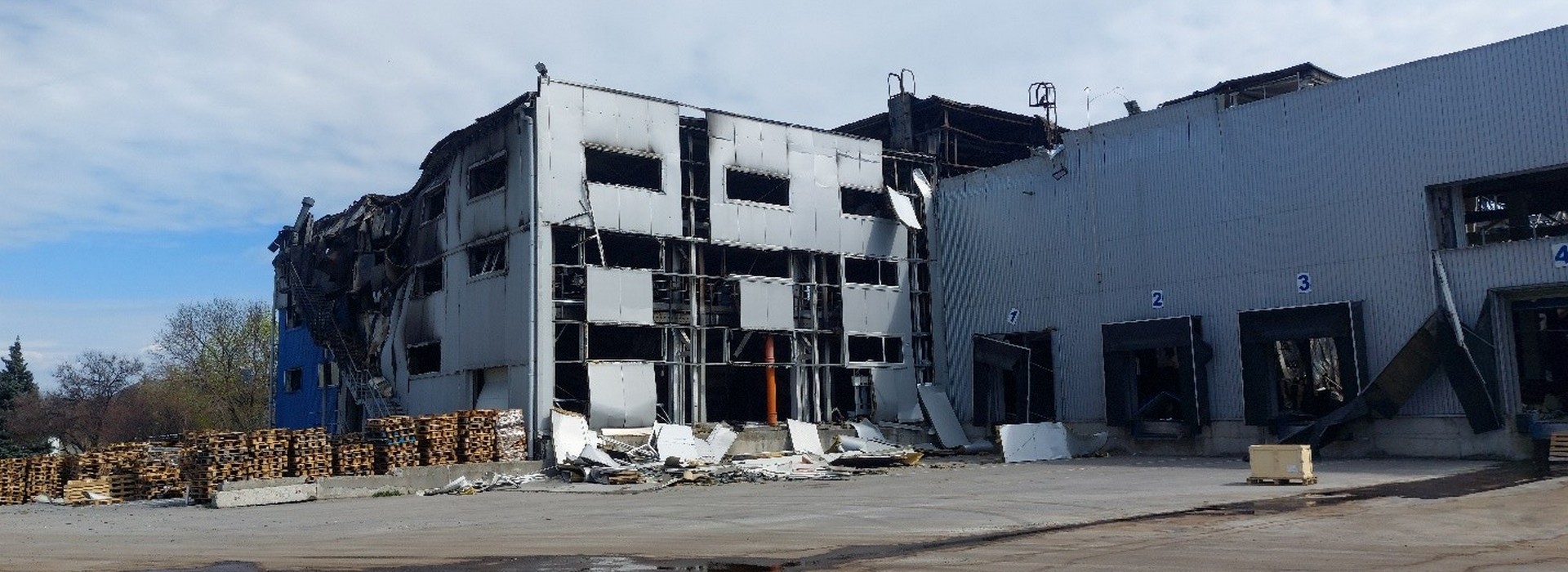

War-related damage in Ukraine continues to escalate. In January-November 2025, Ukrainian insurance company INGO paid UAH 116.4 million in insurance compensation – almost three times the amount paid during the same period last year. In total, over the past two years, the company has disbursed more than UAH 162 million in compensation for losses resulting from hostilities.
The majority of these payouts relate to damage to property, real estate, motor vehicles, and cargo. In 2025, compensation for these categories exceeded UAH 116 million, compared to UAH 46 million in the previous year. These payouts were financed primarily from the company’s own capital, without the involvement of reinsurers, reflecting the specific conditions of the Ukrainian insurance market during a full-scale war. A substantial increase in indemnity payments has been recorded in the corporate segment, where large-scale assets are concentrated and, accordingly, risk exposure is significantly higher.
In most cases, the damage sustained is partial in nature. Typical vehicle damage includes shattered windows, impact holes caused by debris, and body deformation. Residential properties most commonly suffer damage to windows, doors, roofs, and façades, as well as to interior finishes, furniture, and equipment. In the commercial real estate segment, the scale of damage varies considerably – from warehouses and logistics hubs to technologically complex facilities, where the extent of loss depends largely on the specific operational characteristics of the enterprise.
“The war has had the most severe impact on the corporate sector, as this segment concentrates the highest level of risk and the largest volume of losses. These are complex facilities that require a tailored approach both at the underwriting stage and throughout the claims settlement process,” comments Andriy Semchenko, CEO of INGO Insurance Company.
The growth in indemnity payments is driven primarily by portfolio expansion, as both businesses and individuals insure an increasing number of assets. While in 2024 war risk coverage applied to approximately 150 commercial real estate properties, in 2025 this figure exceeded 230. The volume of cargo insured against war risks increased by 1.4 times, while the number of insured motor vehicles nearly doubled. Over the same period, INGO’s total liability for war risks rose from UAH 12.1 billion to more than UAH 26.5 billion. Insurance coverage among private individuals has also expanded significantly: the number of insured households increased from 4,400 to nearly 6,000, and total contractual liability grew from UAH 4.34 billion to over UAH 7.7 billion.
At the same time, the increase in indemnity payments is influenced not only by portfolio growth, but also by the intensity of Russian air attacks and rising sums insured. Both private policyholders and corporate clients are increasingly opting for higher coverage limits, particularly for large-scale or capital-intensive assets. INGO notes that its ability to offer such limits in 2025 is supported, among other factors, by cooperation with international reinsurance markets. The company confirms that its portfolio includes risks reinsured on the London market, with a total liability exceeding UAH 2.6 billion.
“We observe that international reinsurers – primarily those operating in the London market – are engaging with Ukrainian risks far more confidently than a year ago,” says Andriy Semchenko. “This reflects the availability of comprehensive loss statistics, high-quality underwriting, and a proven track record of actual claims payments. In addition, the AON and EBRD program has been launched, supporting the insurance of vehicle fleets, railway rolling stock, equipment, and cargo, including storage at port facilities. For businesses, this translates into coverage limits of up to EUR 2 million per event under the AON/EBRD program, and USD 4–5 million for real estate insured with reinsurance placed in the London market. Higher limits are also possible; however, reinsurers remain cautious about excessive risk concentration on individual assets,” he explains.
It should be noted that, in international practice, war risks are almost never covered under standard insurance programs. In most jurisdictions, losses arising from hostilities, terrorism, or military operations are expressly excluded. Such coverage is typically available only in certain sectors—such as aviation, maritime transport, or strategically important facilities – and is usually offered in the form of a specialized endorsement or extension.
Following the outbreak of the full-scale war, international reinsurers effectively ceased accepting Ukrainian war risks, compelling local insurers to develop their own solutions – initially as limited extensions to traditional policies, and subsequently as standalone insurance programs.
Given the high intensity of hostilities, Ukrainian insurers have adapted their insurance products so that military risks, including air strikes, are covered either under dedicated war risk programs or through additional endorsements. In most cases, these risks are retained on insurers’ own balance sheets.
Over time, as the market accumulated claims statistics and insurers demonstrated robust risk assessment and underwriting discipline, international reinsurance markets gradually began to partially re-engage with Ukrainian risks.
The Ukrainian approach has no direct equivalents in developed insurance markets and today represents one of the most complex and challenging segments of the global insurance industry.