



The Supreme Court has set aside the approval of the preventive restructuring plan of PrJSC Dniprovskyi Metallurgical Plant and referred the case for consideration in bankruptcy proceedings
Hillmont Partners represented GIR International in a complex six-year insolvency matter involving PrJSC Dniprovskyi Metallurgical Plant (DMZ), whose total indebtedness exceeds UAH 1.31 billion owed to more than 92 creditors.
On 12 August 2026, the Supreme Court partially upheld Hillmont Partners’ cassation appeal, set aside the decisions of the lower courts approving DMZ’s preventive restructuring plan and referred the case to the Commercial Court of Dnipropetrovsk Oblast for consideration in bankruptcy proceedings. The ruling brings to a close a six-year sequence of successive court-supervised restructuring procedures, comprising the sanation, its repeated extension and the preventive restructuring, and opens the way for creditors to pursue their claims within a formal insolvency procedure.
The matter
DMZ, one of Ukraine’s largest metallurgical enterprises, has been subject to court-supervised restructuring procedures since 2020. Despite the successive application of restructuring measures, over six years creditor claims increased from approximately UAH 1.246 billion to UAH 1.31 billion, with at least 92 involved creditors.
By early 2026, DMZ was projecting negative EBITDA of UAH 25–46 million annually and reported a net loss of UAH 837.5 million for 2025, having ceased production of its core products and generating revenue principally from scrap metal sales. Nevertheless, the approved preventive restructuring plan contemplated repayment of approximately UAH 1.31 billion over 25 months.
Against this background, Hillmont Partners challenged whether the plan provided a legally compliant and economically viable path to creditor recovery, including whether creditors would be better off under the restructuring than in liquidation.
Hillmont Partners' role
Hillmont Partners acted for GIR International and other stakeholders, developing and pursuing a creditor protection strategy across the restructuring and subsequent court proceedings.
The firm's approach focused on three principal areas:
- Creditor protection and statutory compliance. Challenging the exclusion of creditors whose claims arose after the commencement of the initial restructuring procedure, and compliance with the statutory procedure for amending restructuring plans.
- Economic viability of the plan. Demonstrating that projected cash flows were insufficient to discharge the outstanding debt within the proposed period, and that the plan contained no realistic roadmap for restoring the company’s core production.
- Restructuring standards. Challenging the absence of a proper liquidation analysis capable of establishing whether creditors would achieve a better outcome under the restructuring than in a liquidation.
Hillmont Partners’ arguments were founded, in particular, on the principles enshrined in Directive (EU) 2019/1023 on restructuring and insolvency, which underpin Ukraine’s preventive restructuring regime. The Directive proceeds from the premise that preventive mechanisms are intended to preserve viable businesses facing financial difficulties, and cannot be used as an instrument for prolonging insolvency in the absence of any realistic prospect of recovery.
Observing that distinction in practice — in particular through the best-interest-of-creditors test and an assessment of the plan’s feasibility on the merits, rather than of its formal compliance with the law alone — is an important condition of confidence in the Ukrainian restructuring system as it continues to converge with EU standards.
Significance of the Supreme Court’s Decision for Creditors and Investors
The Supreme Court’s decision is significant for the further development of restructuring and insolvency practice in Ukraine. That is particularly so in cases where an enterprise passes through several successive restructuring procedures against a background of deteriorating financial condition.
The decision underscores the need for:
- genuine participation and proper protection of creditors’ rights throughout the restructuring procedure;
- rigorous assessment of the economic viability of the proposed plan;
- analysis of the liquidation scenario in determining whether the restructuring delivers a better outcome for creditors; and
- a clear distinction between preventive restructuring and procedures that merely defer recognition of a company’s insolvency where there is no realistic route to recovery.
For international creditors and investors, greater clarity around these principles is particularly significant. Predictable rules on restructuring, the protection of creditors’ rights and the transition to a formal insolvency procedure bear directly on the assessment of investment and recovery risk in Ukraine.
The Hillmont Partners team
The firm’s work on the matter was led by Valentyn Zasukha, Senior Partner, Head of Banking & Finance and Financial Restructuring, and Andrii Nyzhnyi, Senior Partner, Head of Dispute Resolution and Bankruptcy. The team combined expertise in financial restructuring, insolvency, the protection of creditors’ rights and litigation on appeal.
Commenting on the significance of the decision, Valentyn Zasukha said: “This case demonstrates the importance of drawing a clear distinction between genuine preventive restructuring and procedures that in effect merely prolong an existing insolvency. Our strategy lay in protecting creditors’ rights and in testing the proposed restructuring against both Ukrainian law and contemporary European principles. The Supreme Court’s decision creates greater certainty for creditors and investors and contributes to a more predictable insolvency environment in Ukraine.”
Andrii Nyzhnyi emphasised the complexity of the case and the team’s strategic approach: “This was a complex six-year process spanning several successive restructuring procedures, numerous creditor claims and considerable financial uncertainty. We concentrated not only on discrete procedural points, but above all on how far the indicators built into the plan corresponded to the actual financial condition of the enterprise. The Supreme Court’s decision allows the matter to move to a formal insolvency procedure.”
Hillmont Partners is a dynamic law firm founded by British and Ukrainian partners to provide high-quality legal and advisory services, and to assist with engagement with state authorities and the shaping of regulatory policy, to investors and companies operating, or planning to operate, in Ukraine. The firm has considerable experience in financial restructuring, insolvency and the protection of creditors’ rights, banking and finance, dispute resolution, corporate transactions and investigations. With offices in Kyiv, Lviv and Odesa, as well as London, Hillmont Partners effectively connects Ukraine’s potential with opportunities for global investors and businesses.
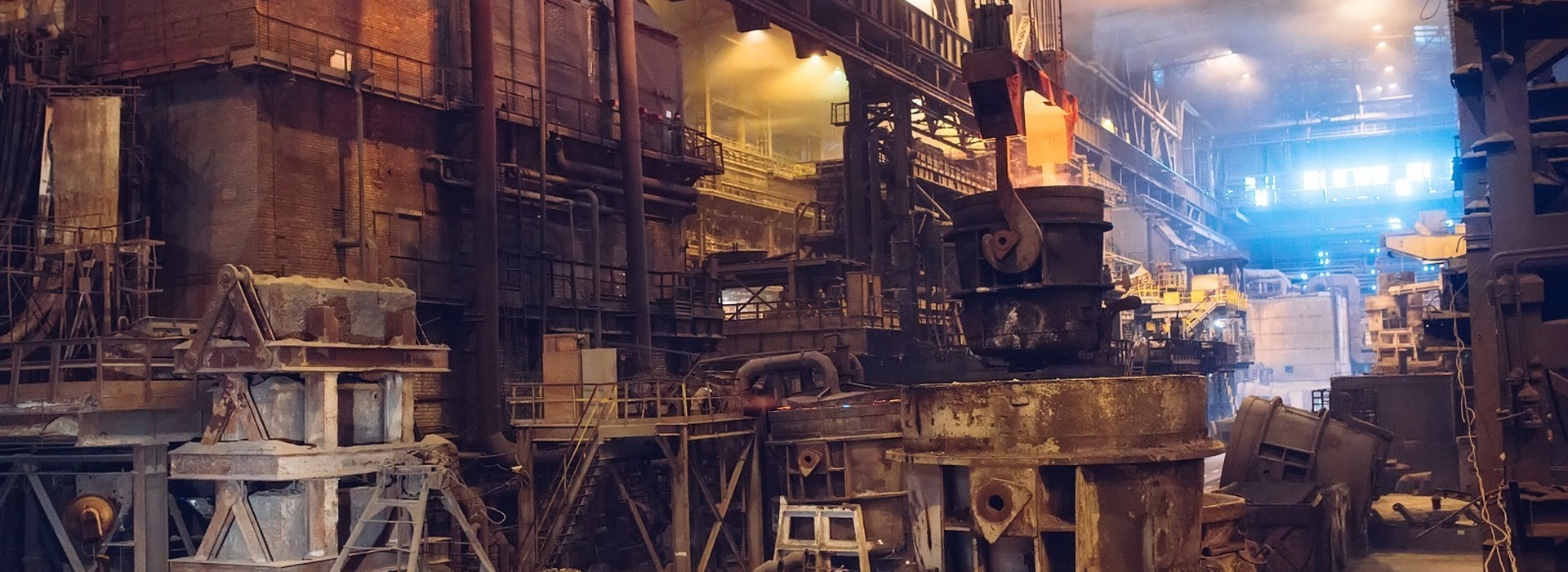
DMZ is one of the oldest metallurgical enterprises in the city of Dnipro, founded in 1884. The plant operates a full metallurgical cycle comprising a blast furnace shop, a basic oxygen converter shop, coke-chemical production and rolling production with two section mills. It reported net profit of approximately UAH 2.95 billion for 2019, the year before the first sanation was opened.
GIR International is a creditor of DMZ. It is a Ukrainian industrial company based in Dnipro with many years’ experience in the refractory materials and industrial supply sectors. The company operates across domestic and international markets, supplying refractory products and solutions for industrial applications.