


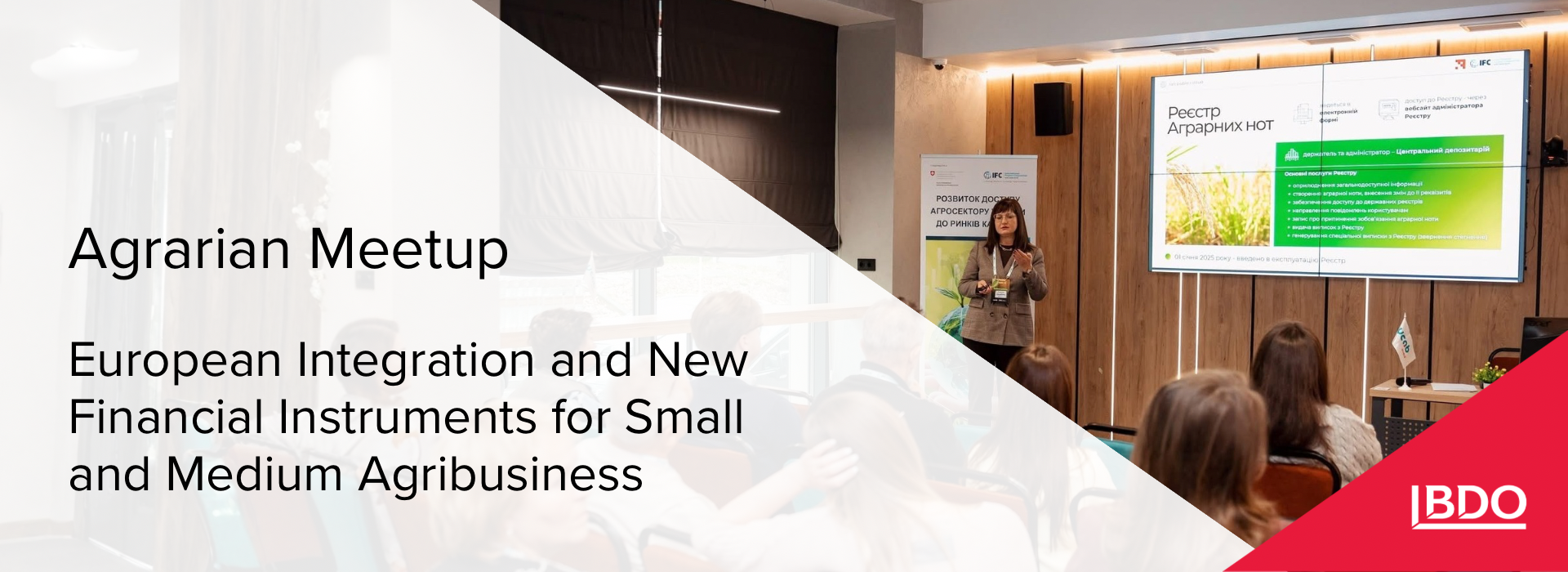
Lviv recently hosted the “Agrarian Meetup” industry event, which focused on the matters of European integration and modern financial instruments for the agricultural sector of Ukraine.
The event brought together the representatives from government bodies and financial institutions, the industry experts, and agricultural producers.
Serhii Tkachuk, the Head of the State Service of Ukraine on Food Safety and Consumer Protection (SSUFSCP), delivered the opening speech, emphasising the strategic importance of adapting Ukraine’s agricultural sector to European standards. He stated that EU integration requires a profound transformation of production processes.
European agricultural policy and challenges for Ukrainian farmers
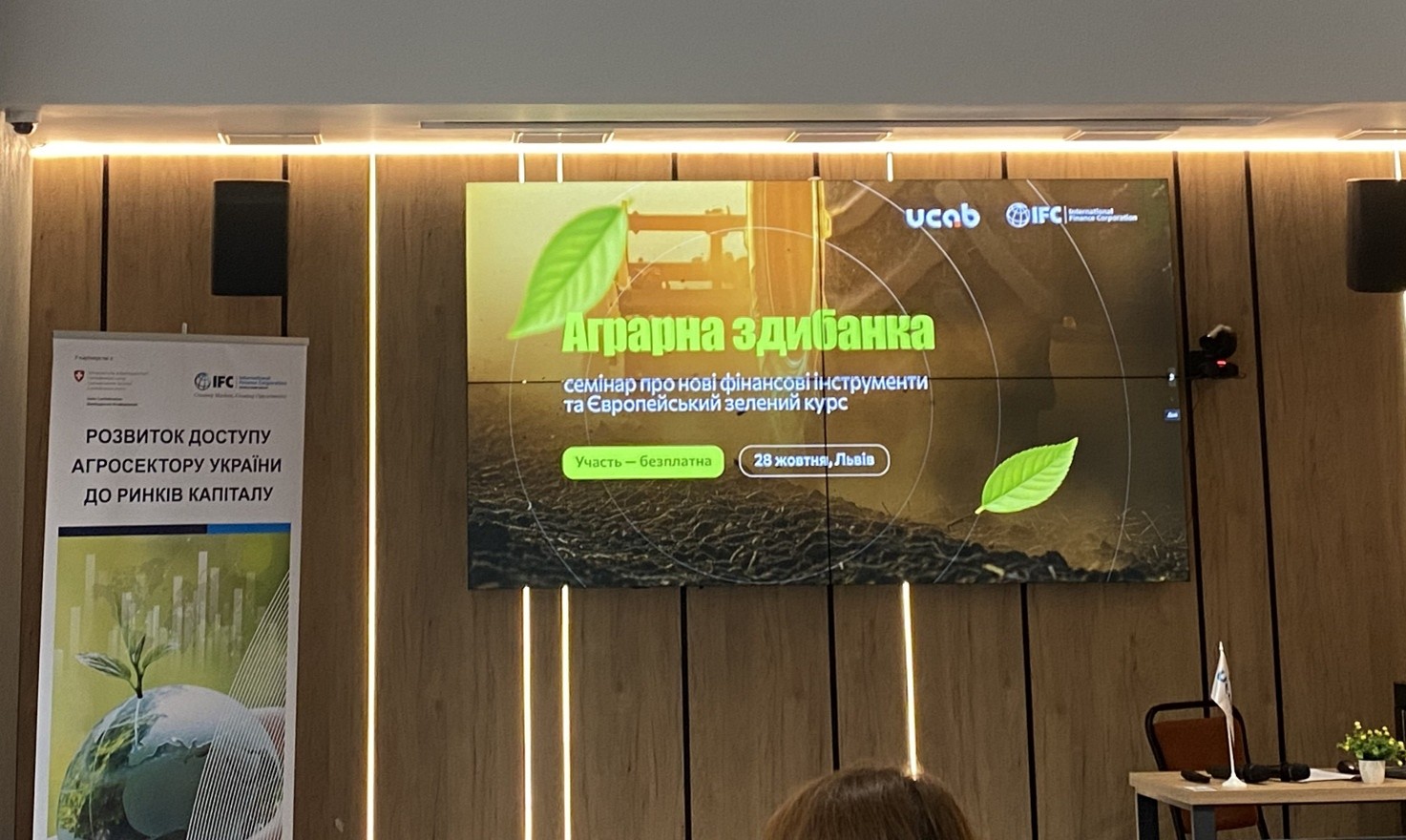
During the event, Oleh Khomenko, Director General of the Ukrainian Agribusiness Club (UCAB), and Sofiia Yakymenko, UCAB Project Manager, presented an analytical review entitled “European Agricultural Policy: Challenges and Opportunities for Ukrainian Farmers.”
According to the data, agricultural exports of Ukraine amounted to USD 24.7 billion in 2024 (59.1% of total exports), with the contribution of small and medium-sized enterprises reaching USD 18.6 billion (9.8% of GDP). The primary export products remain sunflower oil, corn, wheat, rapeseed, soybeans, sunflower meal, poultry, barley and sugar. Export geography covers 168 countries, with 57% directed to Europe, with the EU remaining the key market.
The European market imposes new requirements for agricultural production, including environmental sustainability, process documentation and supply chain transparency. The implementation of the Common Agricultural Policy (CAP) and the Green Deal is projected to reduce the use of chemical plant protection products by 50% by 2030, while also aiming to cover 25% of land with organic farming. The Farm to Fork Strategy is focused on sustainable food systems, improved food safety and animal welfare.
The EUDR Regulation introduces new requirements for accessing the EU market:
- No link to deforestation after 31 December 2020;
- Legality of production and compliance with land, environmental, tax and labour legislation;
- Full documentation of processes;
- Control over goods such as soybeans, cocoa, palm oil, beef, coffee, timber and derived products.
The economic consequences for Ukraine include potential yield reductions (sunflower: -26.7%, wheat: -24.8%, rapeseed: -21.3%), increased production costs and reduced profitability for farmers. Sunflower is forecast to experience the highest price growth (+12.38%).
During the active discussions, Ivan Pankiv, Director of the Lviv Agricultural Advisory Service, emphasised the importance of developing a unified mechanism of internal documentation and control in line with EU standards. Such an approach will guarantee transparency, ensure compliance with European requirements and increase trust in agricultural instruments among market participants.
New financial instruments for the agricultural sector: agricultural receipts and agrarian notes
Modern credit instruments, such as agricultural receipts and agrarian notes, are gaining particular importance. These mechanisms enable small and medium-sized agricultural producers to access additional resources for farm development, while ensuring creditor protection and transaction transparency.
An agricultural receipt is a document that certifies the unconditional obligation of an agricultural producer to deliver agricultural products or make payments to a creditor. The transaction is carried out in paper form and is certified by a notary. The collateral is comprised of future harvests or other agricultural products. The procedure takes 2–3 days, with a cost of 3–5% of the debt amount. Records are maintained by notaries and in the relevant register. The main disadvantages of this instrument are its higher cost, the risk of losing the original and the difficulty in making amendments.
An agrarian note is a non-issuance security certifying the unconditional obligation of a debtor, secured by collateral, to deliver agricultural products or pay funds to a creditor. Agrarian notes are only available in electronic form through the Agrarian Notes Register, which is administered by the Central Depository of Ukraine. The entire process is completed within a single day and the cost is less than 1% of the debt amount (fixed tariffs). The collateral may take the form of any future agricultural product, not only harvests. All changes and obligations are recorded online, ensuring transparency and security for all parties.
As presented by Olesia Omelianenko, Communications and Information Campaigns Expert of the IFC project, and Volodymyr Heraimovych, Agrifinance Expert, 11,345 agrarian receipts had been issued totalling USD 2.35 billion as of 1 October 2025, with an average financing size of USD 192,818, covering 48 product categories.
Electronic infrastructure and modern document flow
Maryna Adamovska, Member of the Board of PJSC NDU, presented key practical information on registering agrarian notes. In her speech, she elaborated on the functioning of the Agrarian Notes Register, the specifics of electronic document flow and the advantages of modern financial instruments for the agribusiness sector.
Agrarian notes offer a number of advantages over agricultural receipts. These include faster processing, lower cost, a wider range of collateral, standardised requisites, the ability to make amendments online without a notary and automatic recording of obligations through the depository. Due to these advantages, agrarian notes are becoming an effective, transparent and secure instrument for attracting financing in the agricultural sector.
Ukraine’s agricultural sector is on the verge of significant change. While there are challenges related to environmentally friendly production, supply chain transparency and compliance with European regulations, there are also significant opportunities to modernise the business processes and enhance the competitiveness of Ukrainian agricultural producers.
BDO in Ukraine is ready to become your reliable partner in this transformation process. We have a specialised agricultural group — a team of experts with a deep understanding of the needs of the agribusiness sector. We offer comprehensive audit, tax, occupational safety, digital implementation and sustainability strategy services. Contact us — our experience and expertise will help you meet the EU requirements and effectively leverage new growth opportunities.