



In January 2026, Vira Savchenko, CEO of BDO in Ukraine, participated in the World Economic Forum (WEF26) in Davos. This year, Ukraine’s agenda focused on the country’s shift from resilience to large‑scale reconstruction, the mobilization of private capital, and the development of clear mechanisms to protect investors during wartime.
Ukraine at Davos 2026: rebuilding continues, “the time is now”
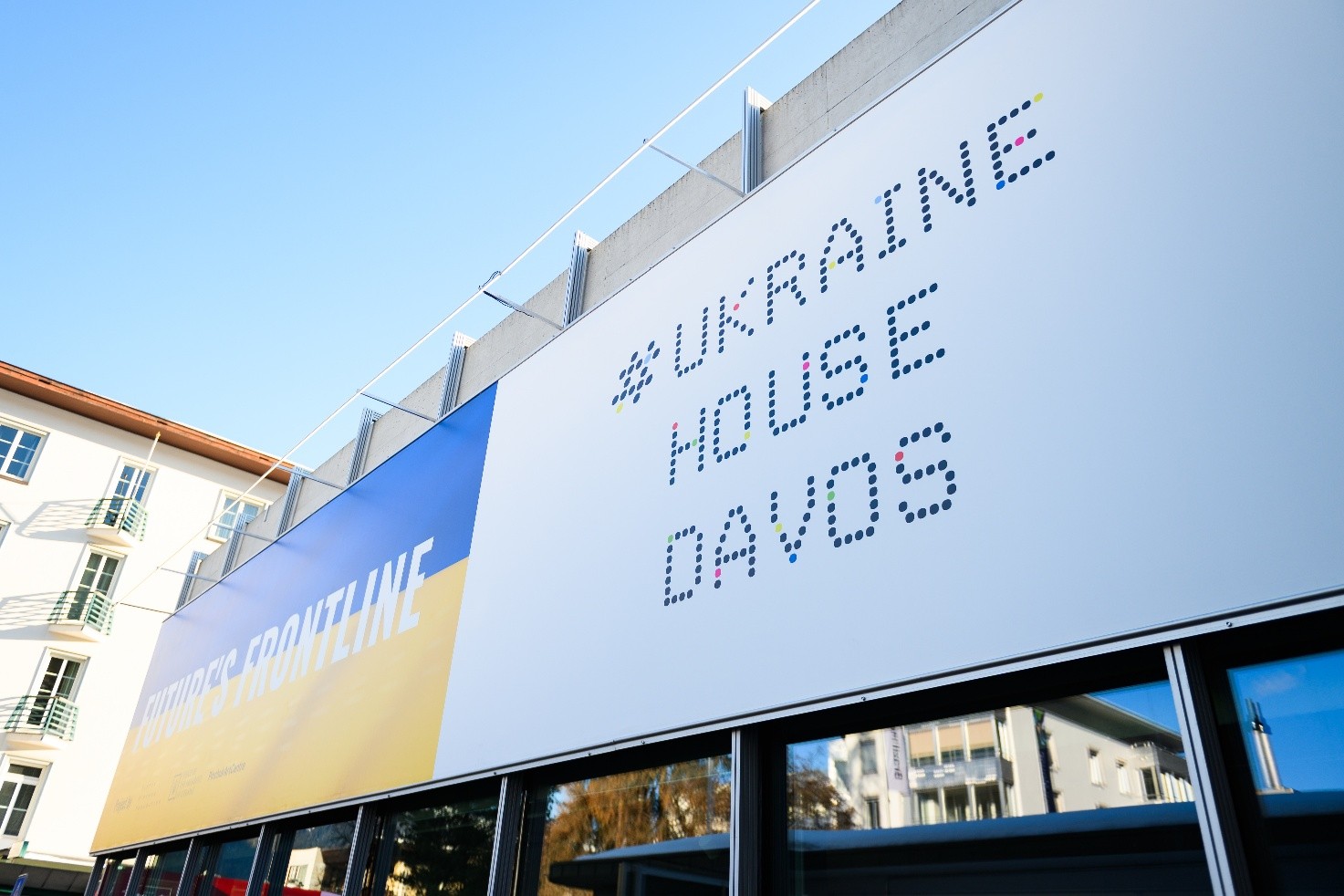
Public discussions at Ukraine House and at thematic panels underscored a clear message: Ukraine is not waiting for “after the victory”. Recovery and reconstruction are underway now, in parallel with ongoing hostilities. The priority areas include infrastructure, energy, transport, ports, housing and social facilities — all essential for people’s safety, economic continuity and the resilience of cities.
Energy was highlighted as the number one priority due to Russia’s systematic attacks on power generation and transmission infrastructure. Efforts now focus on restoring and replacing capacity, as well as laying the groundwork for modernization. This is both a matter of survival and a prerequisite for competitiveness.
At the same time, investors were shown that even under constant strikes, Ukraine’s logistics and port operations remain functional. One example cited was port workers achieving 95% of their annual cargo‑handling plan. The message was reinforced by Ukraine’s openness to private capital, including through concession projects.
De-risking and war risks: necessary but not sufficient
At Davos 2026, international financial institutions and private private-sector leaders voiced a shared position: large-scale capital will return faster when de-risking instruments are in place — including guarantees, war‑risk coverage mechanisms, and structured co‑financing — and when the first major successful projects create momentum across the market. IFC, EBRD, JICA, the EIB and other partners reconfirmed the availability of such tools.
Panels devoted to the “economy of the future” stressed that early investors need risk‑mitigation solutions (including war‑risk coverage/insurance) as the baseline that allows infrastructure, energy and technology projects to scale.
However, one of the key strategic insights of WEF26 is that de‑risking without judicial protection remains incomplete.
War‑risk insurance lowers the entry barrier and provides short‑term stabilisation, but it is inherently temporary. It does not resolve the fundamental issue of accountability for damages.
By contrast, a systematic mechanism for recovering damages from the aggressor is a game changer: it shifts the paradigm from “compensating for risk” to “creating economic responsibility.” This approach forms the foundation of a new accountability-driven economic model.
European integration as a guarantee of clear rules
A clear message was delivered in Davos: European integration is not a political slogan, but an economic magnet that brings standards and predictability. Ukraine is now in an active phase of implementing reforms, and it was underscored that integration into the European energy market should become a practical reality as early as 2027.
Innovation and defence resilience as drivers of investment attractiveness
Discussions about Ukraine’s future highlighted the unique speed of its innovation model — “battlefield → R&D → production” — which compresses technology development cycles to mere weeks and fuels a new competitive economy. This dynamic is reshaping perceptions of Ukraine: the country is increasingly seen not as an “object of aid,” but as a provider of cutting‑edge solutions for Europe’s security and resilience.
BDO’s systematic approach: from damage recording to recovery procedures
The team of BDO in Ukraine has developed a practical guide for businesses: “How to act if your property is damaged as a result of armed aggression: a step‑by‑step plan”.
The document outlines:
- algorithm for recording damage
- process of obtaining victim status in criminal proceedings
- methodology for assessing actual damages and lost profits
- procedure for filing a claim in commercial court to recover damages from the aggressor state
- tax and accounting implications
- available state support programmes.
The key point is that recording the damage is only the first step. The next step is to transfer this documentation to the appropriate judicial procedure, which establishes a legal basis for future compensation.
Judicial protection of investments: practical signals for investors
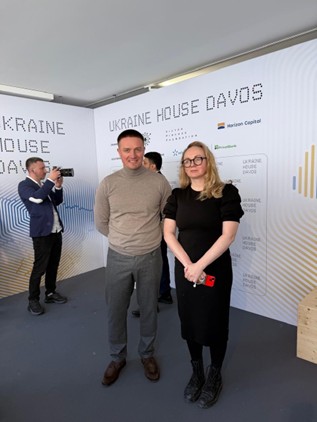
On the sidelines of WEF26, Vira Savchenko held a professional conversation with Serhiy Stasiuk, a judge of the Kyiv Commercial Court, on the judicial protection of investments during wartime. The conversation focused on the pragmatic questions investors are asking:
- Are the courts fully operational?
- Are judicial decisions actually enforced?
- Are there real precedents already in place?
- Is there a systemic position on this at the state level?
These are among the key signals that matter to business:
- The Supreme Court has established a clear position affirming that Russia has no judicial immunity in cases related to damages caused by its aggression
- Commercial courts are accepting claims against the aggressor state and issuing decisions on compensation
- An international Register of Damages is being formed
- Russia’s frozen assets abroad provide a potential basis for enforcement
Taken together, these developments mean that a growing body of court decisions is taking shape. And this growing legal record against the aggressor is becoming an economic factor in its own right — not merely a legal process.
Ukraine as a laboratory for new mechanisms
WEF26 highlighted another important trend: Ukraine is no longer viewed solely as a high‑risk environment. It has become a laboratory for a new model of economic security, where innovative mechanisms are being tested, including:
- war-risk insurance
- hybrid financing models for reconstruction
- court decisions against the aggressor state
- integration of national procedures into the international compensation architecture
It is in Ukraine that a new, combined toolkit is taking shape — one that may influence global approaches to responding to interstate aggression.
International dimension: structured entry into the recovery market
In parallel, the BDO team, with the support of partners, prepared a practical guide for international businesses: “8 Practical Steps to Start Working with Ukraine’s Reconstruction”.
The document systemises the approach to entering the Ukraine’s reconstruction market, including:
- identifying the ultimate beneficiary
- understanding procurement procedures
- developing an impact case
- engaging export credit agencies
- structuring co‑financing arrangements
- building a partnership with a local company.
This confirms the main point: recovery is a structured process where finance, law and institutional capacity work together.
Strategic conclusion
WEF26 demonstrated that Ukraine’s investment architecture rests on three pillars:
- de-risking through guarantees and insurance
- a functioning judicial system
- formation of economic liability of the aggressor
It is this combination that builds investor trust. Ukraine is shifting from a model of “risk that must be compensated” to a model of “risk that must be held accountable.” This shift is reshaping not only Ukraine’s investment landscape but also the global economy.
BDO in Ukraine supports businesses in recovery, development and risk management.
If you need professional assistance or comprehensive support, please contact us.